

The legendary rivalry of English and Australia cricket has been shaped by legendary figures. Within, enthusiasts celebrate personal favourite cricketers across the men's Ashes series timeline.
Jonny Bairstow
On the topic of a favourite player, the choice falls on the combative Jonny Bairstow. His journey in the Ashes aptly sums up the triumphs and tribulations of an English career. It started with the 2013 series, where he tempered his attacking instincts to graft with Ian Bell. Later that year, he was promoted as a replacement for wicketkeeper the injured Matt Prior, facing the formidable pace of Mitchell Johnson despite a lack of first-class cricket for months.
He had an Ashes-winning comeback during 2015 and remains the only English player to have scored two Ashes hundreds on Australian soil since the year 2011, a feat accomplished despite intense media scrutiny. A difficult campaign came during 2019, though it featured a crucial contribution in Headingley that aided the legendary Ben Stokes and Jack Leach. After returning in the 2023 series, a magnificent 99 not out at Manchester was cruelly robbed of a match-winning result due to persistent weather.
Syd Barnes
Few bowlers command such awe as the phenomenal Syd Barnes. His performance of 13 for 163 in 80 gruelling overs during the second Test stands as testament to his skill. One can only wonder what more he could have accomplished if he were a less difficult character to manage. With a staggering haul of 6,229 wickets with a cost of just 8.33, he is regarded by many as the finest bowler ever. Reading about his statistics as a youth proved completely captivating. What a a glorious bastard, simply incomparable. In the words of MCC secretary Billy Griffith: “The extraordinary thing regarding him was that everyone who played with him thought him the best there was. There was never any doubt in their minds.”
Richie Benaud
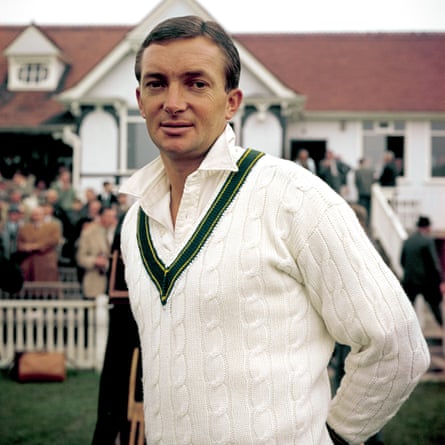
For many, the ultimate Ashes cricketer is the legendary Richie Benaud. A move to secondary school in 1961 aligned with the Ashes series, where the excitement was conjured by the glamorous Australian captain. He didn't look like other cricketers; he possessed flair combined with audacity, a stark difference from the more traditional approach. An eloquent, charismatic captain who arrived with a reputation for playing positive, exciting cricket.
Memories from that season, when a lifelong love affair for the game was formed, centre on the last day of the fourth Test. Watching intently the broadcast, a young fan saw England chase 256 to win. A promising beginning had Ted Dexter construct what many consider a magnificent knocks. However he fell for 76, caught by Wally Grout off the bowling by Benaud. Hope remained as captain Peter May coming at the crease. A delivery from Benaud and May deflect the ball to leg. Next up, Benaud bowled again outside the pads, it turned sharply out of the footmarks to bowl him. May was out for a duck, the silence palpable. Benaud sealed victory with figures 6 for 70 , thus the visitors retained the urn. It was bittersweet emotion—wanting an England win yet in awe of a true hero.
Ian Botham
Simply put, he is England's finest all-rounder. Indefatigable, inspirational, brilliant. For his heroics at Headingley in '81, the exploits at Old Trafford that same year, the triumphant tour of Australia, not forgetting his iconic comment about Merv Hughes. A hero not just for his philanthropy and his tremendous fortitude.
Harry Boyle
The annals sometimes forget players such as Harry Boyle, yet he deserves to certainly be among the top 100 key figures of the rivalry. Boyle was Fred Spofforth's new-ball partner during the iconic 1882 match, his role proved just as crucial as Spofforth's to secure the win. In fact, it was Boyle who dismissed tailender Edmund Peate to clinch that historic game. Although Spofforth is rightly hailed as the father of pace bowling, Boyle proved humble and self-effacing, always putting the team first. This humility resulted in his memory becoming somewhat forgotten, even though at his passing highly regarded as an important figure in cricket's history.
Don Bradman
The choice must be Don Bradman. Whilst leg-spinner Shane Warne stands as a giant, the monumental volume of runs Bradman accumulated versus England, combined with his tactical acumen, establishes him not just as a cricket legend but as the only possible answer. A batting average just shy of ninety, two triple centuries, and a magnificent double following a bold move to reverse the batting order to protect his main batters on a damp wicket in Melbourne in 1937.
Though not alive in his time, every enthusiast becomes familiar with his exploits in the 1930s and the Invincibles tour. While many recall his last innings zero that denied him a three-figure average, some treasure images of his practice for hours against a water tank, and witnessing him endure the vicious Bodyline tactics to still average with a 56 average in a notoriously difficult Ashes for batters. He endures as the greatest batsman for countless fans.
Mike Brearley
He took the art of captaincy, so vital in cricket, to unprecedented heights. He epitomised his era by demonstrating that winning in the Ashes, especially in Australia, needed not just hard work and power. He inspired through considered, intelligent leadership, fostering a culture in which his players' abilities thrived. His reading of situations, conditions, and player psyches was masterful at the very moments a change in momentum was needed.
His was a beautifully subtle, subtle method {that challenged|contradict


